A New Mom Told Me She Found a Wad of Her Own Hair in the Diaper Cream.
That’s the Morning It Gets Real.
The shed after a baby is more than anyone warns you about. It’s hormonal, it’s temporary, and here’s the part nobody explained.


If you’ve caught your own shed hair somewhere it should never be, one second from your baby’s skin, please know you are not going bald and you are not a mess. This is hormonal, it is common, and for most of us it is temporary.
One mom told me it was a little wad of her own hair rolled into the diaper cream, and she almost smeared it on her daughter before she noticed. That story is not rare in my practice. Nobody warned her it would be this bad. It was in clumps in the shower, all over the couch, and it had started to feel like she was shedding her whole identity along with it, with no one able to tell her if it would ever stop. That is the morning most moms stop calling it nothing. So here is the part nobody explained, and what your body is actually doing.

20+ years in practice · 100,000+ patient visits
What I see in my practice
Prevalence and supplement-use figures are sourced (see references). Practice observations are Dr. Barron’s own.
Estrogen Held Your Hair. Then It Dropped.
Through pregnancy, high estrogen holds your follicles in their growth phase, so the hair you would normally shed stays put. That is the thick pregnancy hair. After delivery, estrogen falls sharply within days, and that whole cohort of follicles is released into the resting phase together. Resting hairs let go about two to four months later, in a wave. That is why month four feels like it came out of nowhere. You are not losing hair you were meant to keep. You are shedding, all at once, the hair pregnancy let you hold onto.
This has a name. Telogen effluvium. It is hormonal, it is temporary, and no supplement reverses the hormone drop that causes it. Anyone who promises to “stop” it is not being straight with you.
- ~12 months: by which it has largely resolved for most women.
So if the shed is hormonal, here is what is left to do. You cannot change the hormone drop. You can support the recovery your body has already started: the three things recovery actually spends: collagen for the scaffold under the skin, keratin for the strand itself, and the minerals the follicle works with. Recovery and nursing draw all three down at once.
The months pass either way. Hair grows on a roughly 90-day cycle, so what you start today is what shows up as new growth a cycle from now. Waiting does not pause the shed. It only adds months before you feel like yourself again.
Those little hairs along your hairline. That's it coming back.

Why One Ingredient Was Never the Answer
For years the advice was to grab a single hair vitamin and wait. But look at the studies that have held up, and you will see that researchers tested combinations of ingredients, never one ingredient alone.
Why What You Already Tried Didn’t Work
Every new mom's shelf. None of it was built for recovery.

Why what you already tried didn’t work. Almost every mom who reaches me has already tried something. The prenatal she kept taking. A drugstore biotin gummy. Maybe a collagen powder. It usually did nothing she could see, so she decided supplements don’t work. A prenatal was built to grow a baby rather than to recover from one. A single biotin gummy supports the strand at best. Neither was built for what recovery draws down all at once: collagen, keratin, and the minerals together.
It is not that you did anything wrong. You did everything right. The products were built for a different job. And most of them hide the amounts inside a “proprietary blend,” so you cannot see what you are getting. While you are nursing, you should be able to see every line.
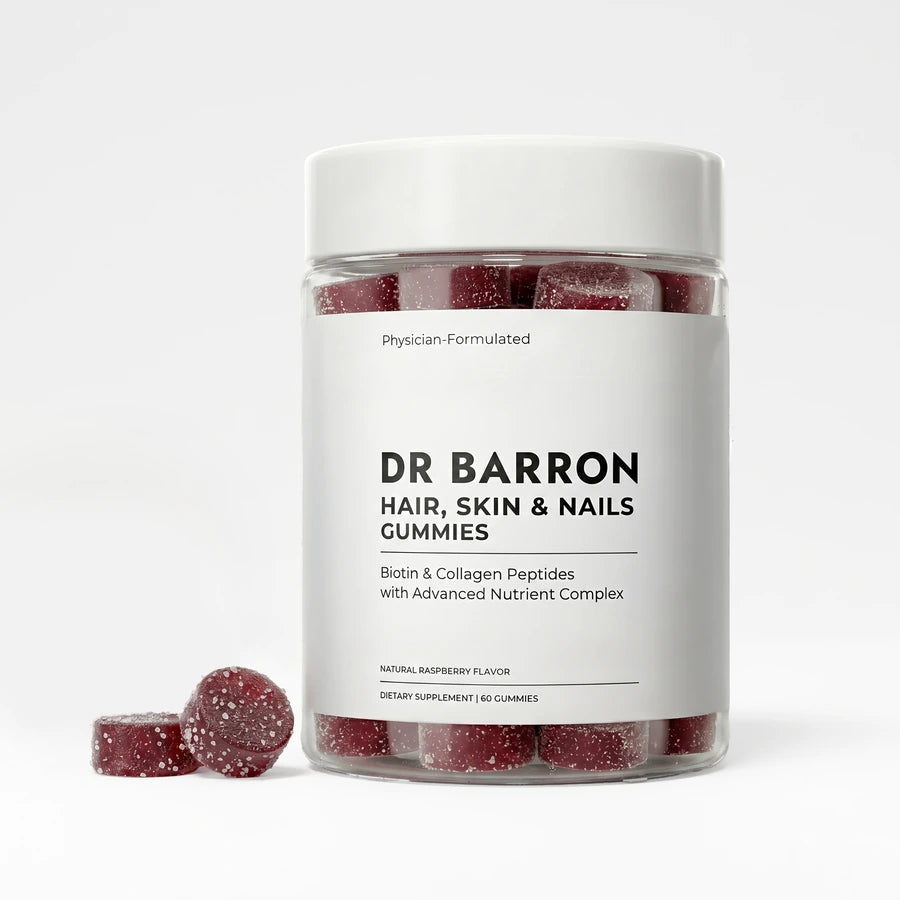
Two a day, within reach for when the baby finally sleeps.

What a Supplement Can Actually Do Here
What a formula can do is support the recovery your body has already started, by putting collagen, keratin, and the minerals back on the table while your body does the part only time can do.
Because your hair grows on a roughly 90-day cycle. The recovery you support today is what shows up as new growth months from now. Waiting three months to start does not pause the shed. It only adds three more months of watching it, and three more months before you feel like yourself again. You cannot rush the hormone drop. You can make sure that when your body rebuilds, the materials are there. That is the part that is in your hands, and it is worth starting today.
The four pathways
New hair is rebuilt on a collagen scaffold recovery has to replace.
Keratin is most of the strand. Its building blocks depend on cofactors recovery stretches thin.
The reserve that shields follicle cells runs low during recovery.
Recovery and nursing pull the same cofactors hair depends on.
“I had postpartum hair loss, and this helped me recover my thick hair.”


Why I Built This Formula
After twenty years treating hormones, I built the one I wished I had.

If you have already taken your prenatal faithfully, added biotin, and watched the shedding keep going, your skepticism is earned. So let me be straight about what this is.
After watching this play out in hundreds of new moms, I built what I wished I could hand them: a formula built around the pairings the research actually tested, with every dose printed on the label, to support the recovery your body is already doing. Cancel anytime, and return it within 90 days if nothing shifts.
What Makes DR BARRON Different
Every dose is right there on the label. Nothing hidden.

What makes it different
Physician-formulated. Built by a board-certified endocrinologist rather than a marketing team.
Every dose on the label. No proprietary blend, nothing hidden, every dose printed for you to check.
Research-backed ingredients. Chosen for recovery and structure rather than shelf appeal.
Honest about the shed. Support for your recovery rather than a promise to stop something that is temporary.
One daily dose. Built for newborn life rather than an eight-bottle stack.
How It Compares
When a new mom asks how this compares to what she is already taking, I walk her through the same checklist I would use for any plan.
How it compares
The single daily dose is the only box a drugstore gummy reliably checks. Everything that decides whether a formula can actually support recovery, and whether you can vet it for yourself, it misses.

Eleven actives, one daily dose, built to support postpartum recovery.
But you shouldn’t take the formula on my word alone. So here, in my own words, is why I built it to support recovery after birth, and why I refuse to tell you it is “breastfeeding-safe.”
Dr. Barron explains why she built this formula for postpartum recovery and where generic supplements and prenatals fall short.
What New Moms Are Telling Me
Helping my postpartum shedding
My postpartum shed got bad. So far I’ve started noticing a slight change in my hair and skin texture in a great way!
My postpartum shed is calmer
After my baby, my hair started shedding a lot. I am still shedding so hope it gets better.
Individual experiences. Responses to any supplement vary.
What The Published Research Measured
Here is the science the formula is built on, what published research found on the key ingredients, studied on their own.
What the research measured
Source: Patel 2025. Per-ingredient research rather than the finished gummy; bars illustrative. Not FDA-evaluated.