
7 Reasons New Moms Are Adding This Serum Before The Temples Start Pulling Back
It feels like it happened overnight. The brush, the drain, the temples pulling back. Then the hairline, then the part. But the biology started months earlier, and it’s playing out at your scalp rather than in the prenatal still sitting in your bloodstream. The prescriptions come with a conversation you may not have had yet, and rinse-out products leave before the follicle can use them. Below: 7 reasons new moms are supporting the reset directly at the scalp.
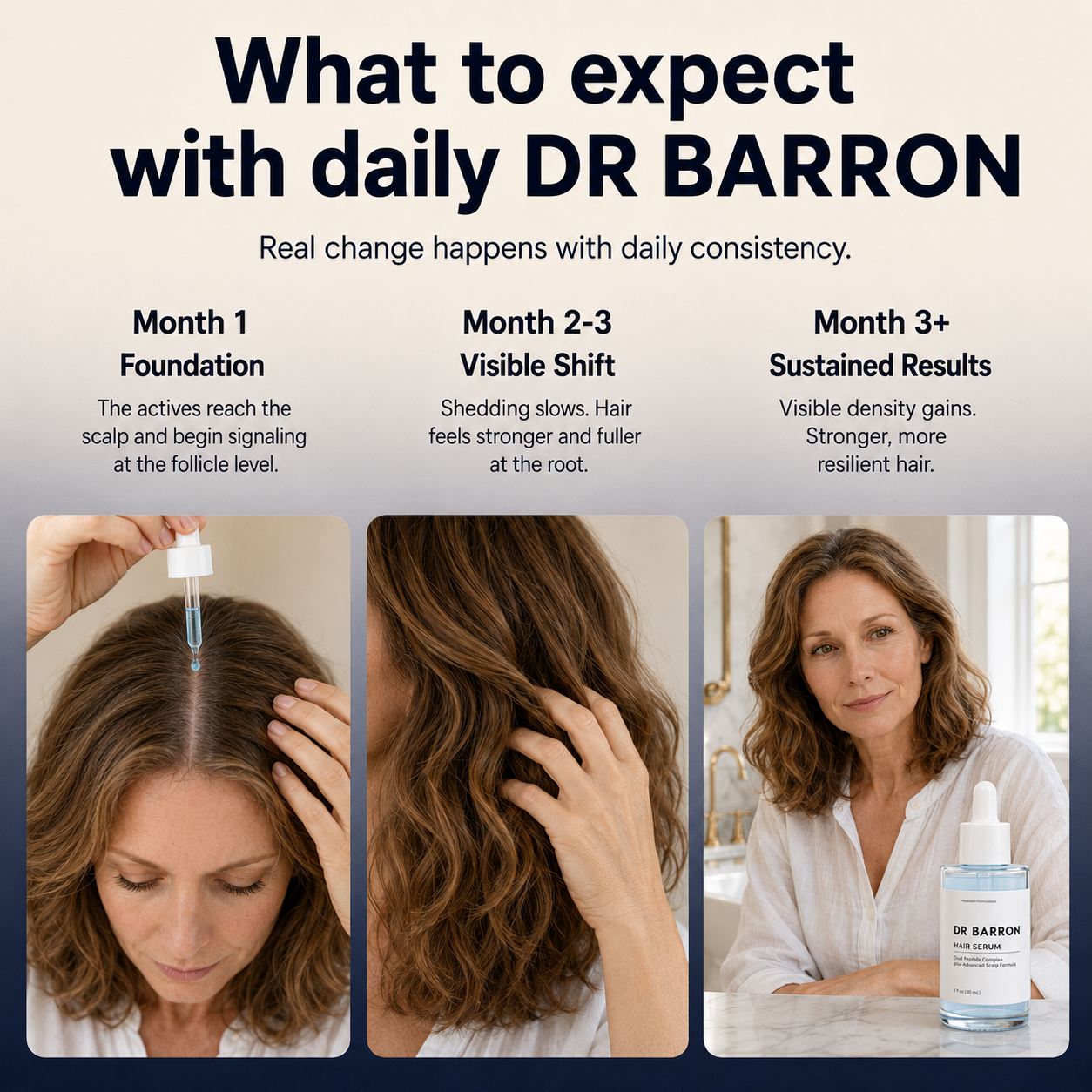
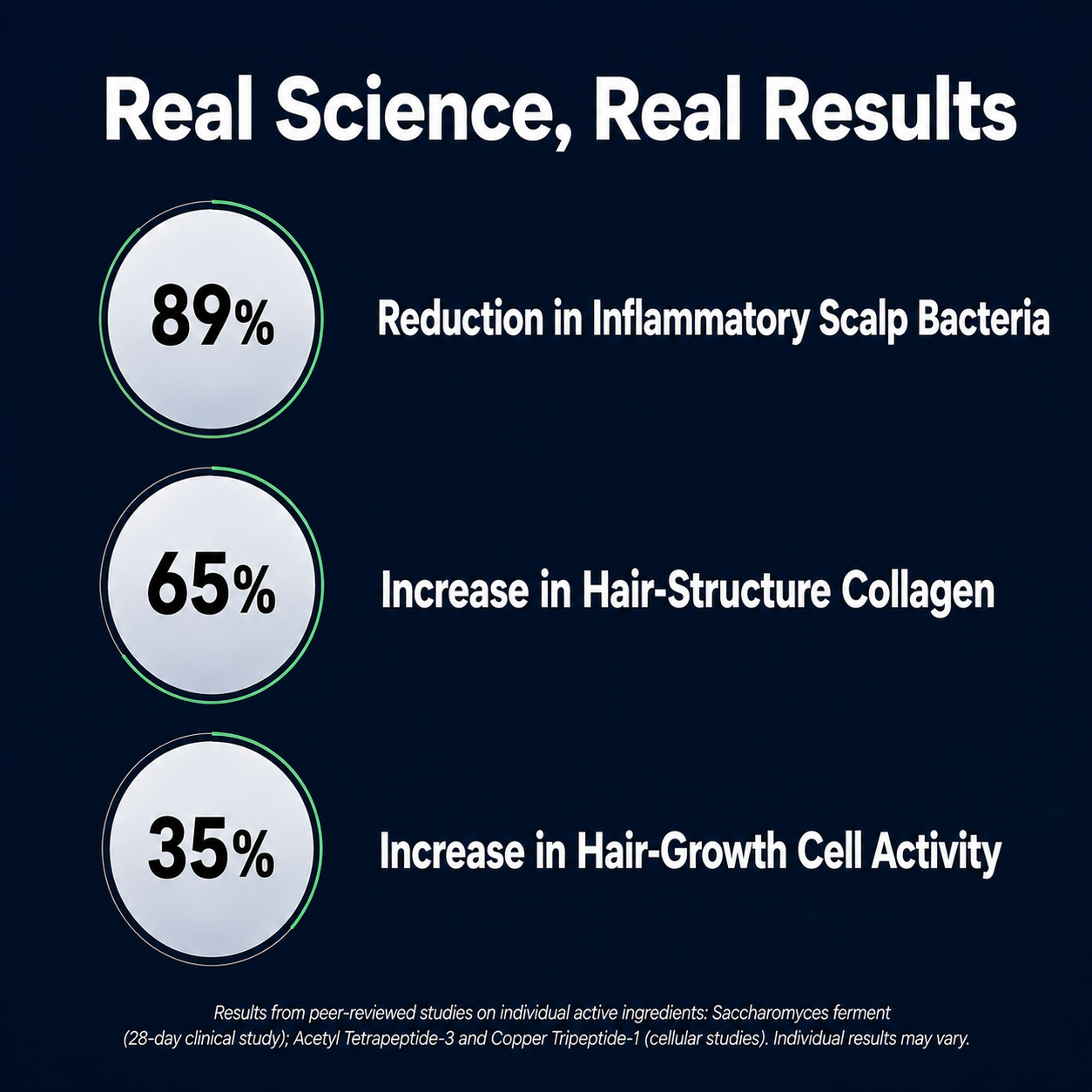
 ★★★★★
★★★★★“Most brands hide behind proprietary blends or sprinkle in a few trendy ingredients. I liked that every ingredient and dose is clearly listed, and the formula actually feels intentional.”
RACHEL R.Trenton, NJ · Real DR BARRON customerThe Shed Doesn’t Live In Your Prenatal. It Lives At The Scalp.
The shedding starts after pregnancy ends. The follicles are responding to what happened months ago. The temples thin first. Then the hairline. Then the part. None of it happens systemically. It happens at the scalp. The prenatal is in your bloodstream. The shedding is at the follicle.

Your OB Said “It’ll Pass.” What She Didn’t Say: It Started Months Before You Noticed.
The shedding feels sudden. The biology started months earlier. Pregnancy held follicles in growth phase longer than normal. At delivery, they exit at once. Collagen and laminin run low at the dermal sheath. Estrogen drops and DHT activates in places it hadn’t before. The scalp barrier thins. None of it shows in the bloodwork. All of it shows at the scalp.
The Prenatal Was Built To Feed Two. The Scalp Needs Something Else.
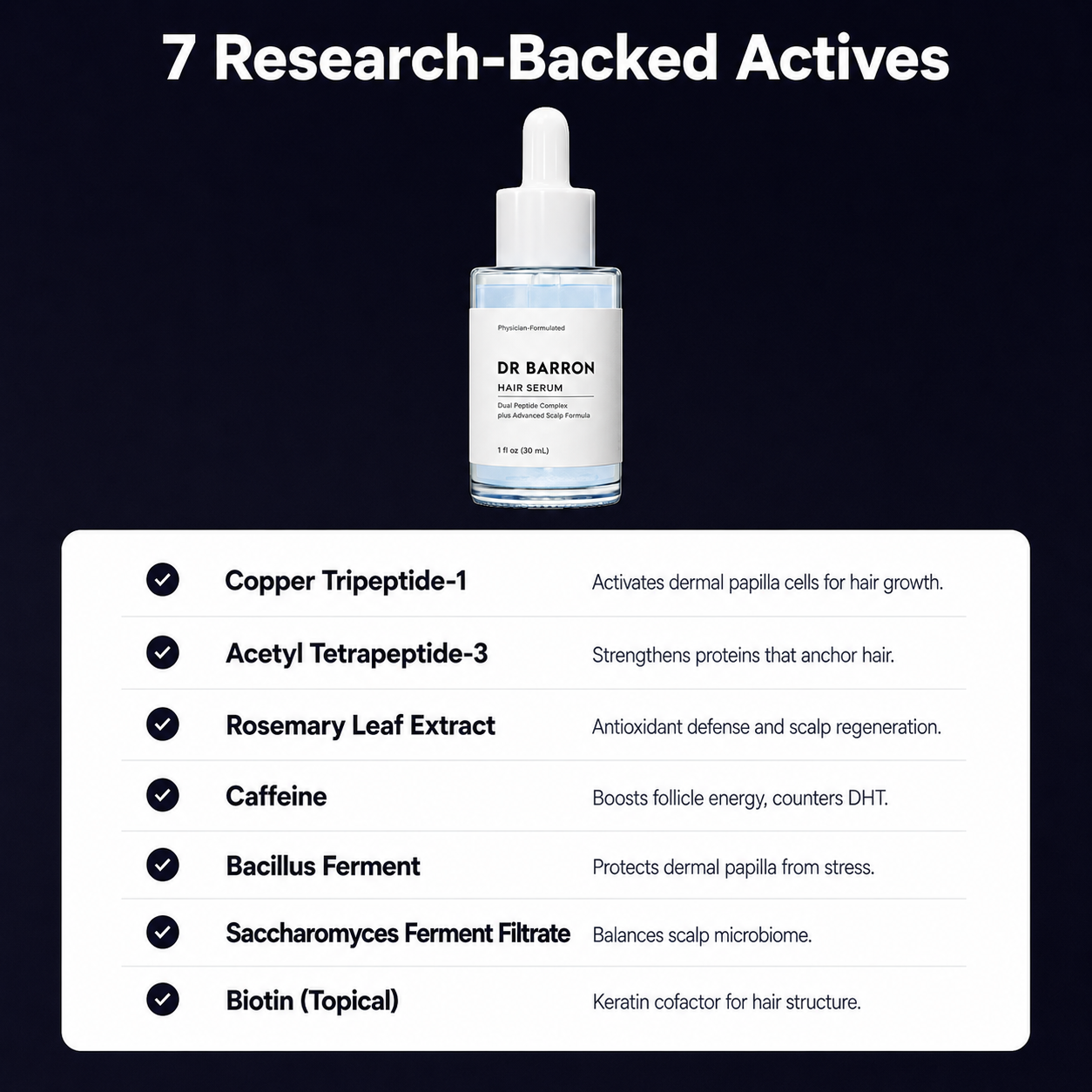
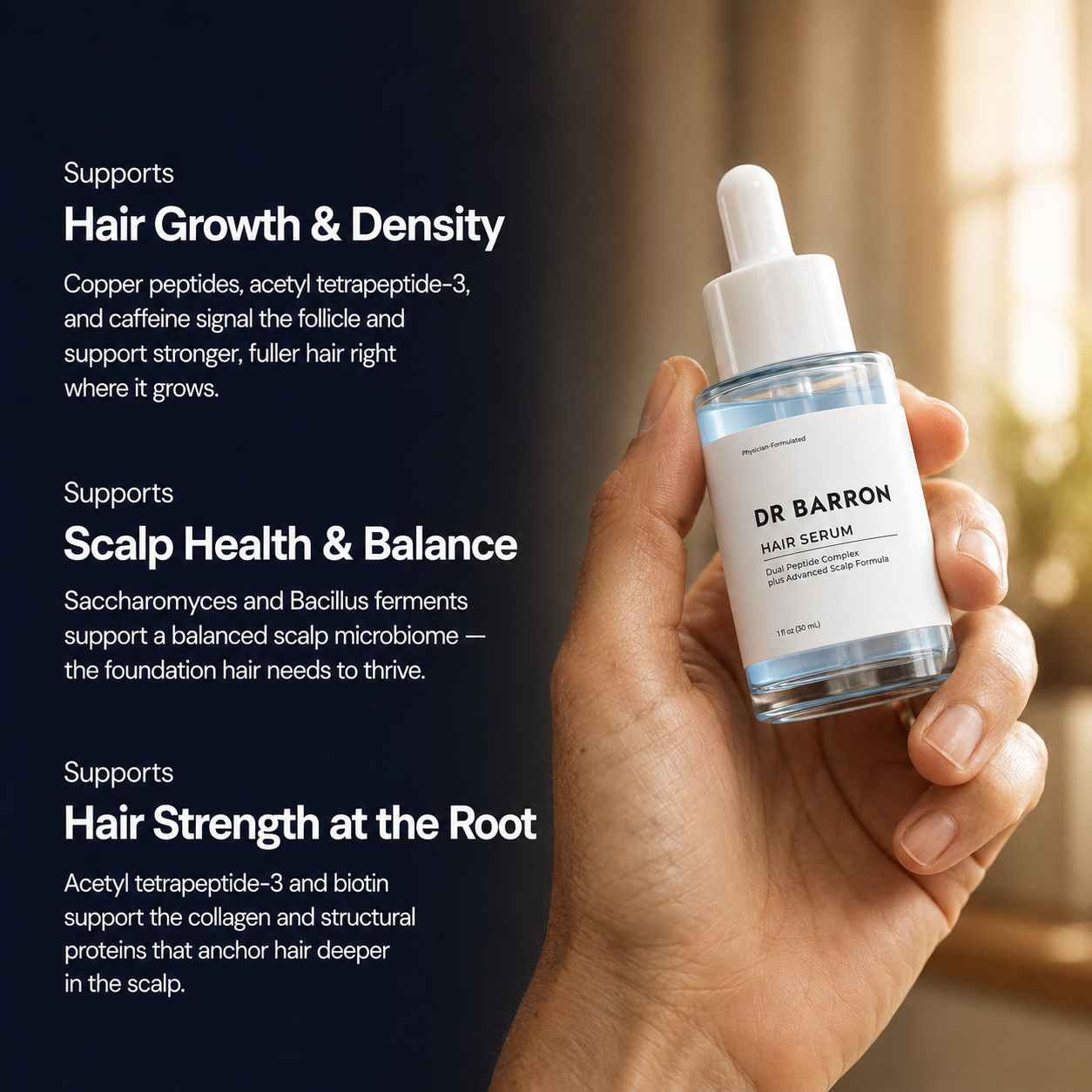
Hair doesn’t grow from the bloodstream. It grows from the dermal papilla. The prenatal doesn’t reach it. The structure? Copper Tripeptide-1, Acetyl Tetrapeptide-3. The keratin? Topical Biotin. The DHT pathway? Rosemary leaf. The microcirculation? Caffeine. The scalp barrier? Bacillus + Saccharomyces ferments. Most postpartum women aren’t choosing between products. They’re choosing between uncertainty and doing nothing. Seven actives, none of which require a prescription. Talk to your provider.
Two Peptides That Signal Growth And Anchor The New Hair Coming Back.
Postpartum shedding isn’t hair loss. It’s a reset. Pregnancy held thousands of follicles in growth phase longer than normal. At delivery, they release together. That’s not the follicle dying. It’s the follicle cycling. The dual peptide complex works on the two parts of that reset: Copper Tripeptide-1 keeps the dermal papilla cells signaling growth as the cycle restarts, and Acetyl Tetrapeptide-3 is included to support the collagen and laminin proteins that anchor the new hair coming back.
Two follicle mechanisms.
You Were Told To Wait It Out. Most Topicals Came With Warnings.
The usual prescriptions come with a conversation you may not have had yet. Most over-the-counter scalp products carry a small line on the back: consult a doctor before use while breastfeeding. The shed shows up anyway, around month four, when you have the least time and the least left to give. I will not tell you it is “nursing-safe.” Every hair brand says that, and no topical for hair has been studied the way a claim like that should be. What we do is print every active and dose on the label so you and your own OB or lactation consultant can review the exact list and decide together.

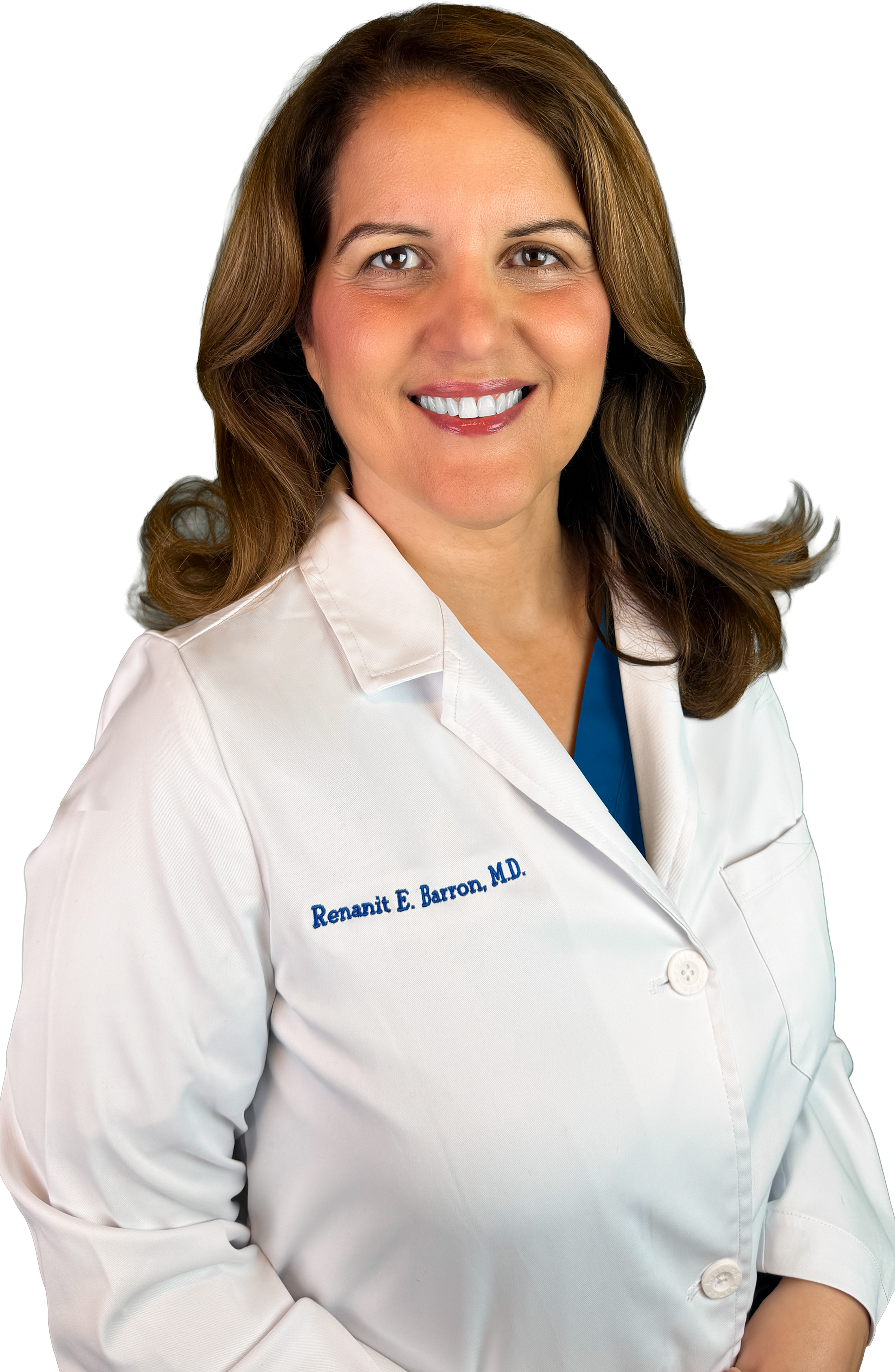
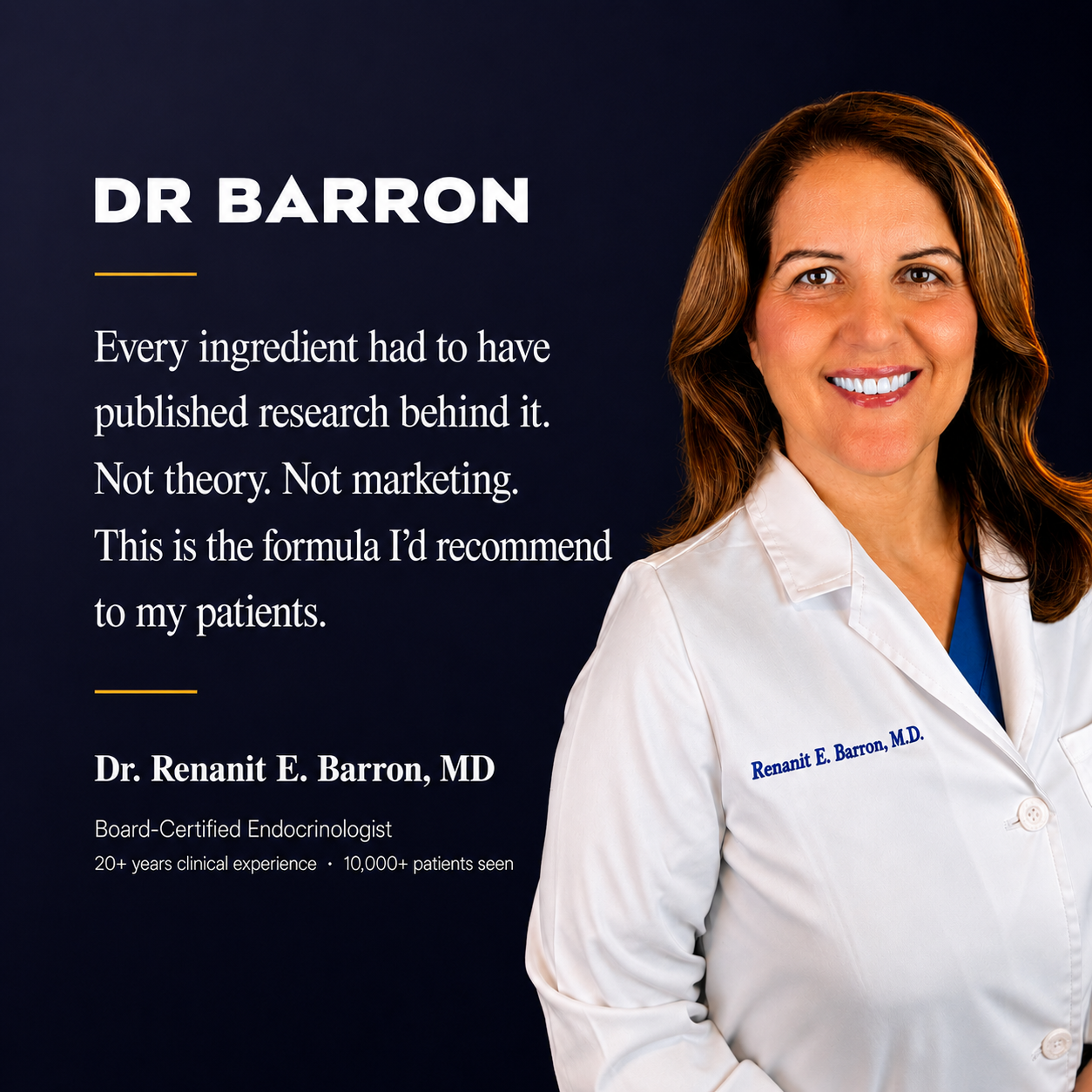
Dr. Renanit Barron, MD
“Every postpartum mother I see gets told the same thing: it will stop on its own. The problem is that ‘on its own’ is a 6-12 month window, and the supplements meant for pregnancy weren’t designed for what recovery actually depletes. Pregnancy built. Postpartum rebuilds. The cofactors aren’t the same.”
Stop Buying Rosemary Oil, Postpartum Hair Topicals, And A Scalp Serum Separately. One Serum. One Subscription.
Rosemary oil. A growth serum with the influencer codes. A scalp tonic. Postpartum hair vitamins. The hardest part of postpartum shedding isn’t choosing between products. It’s the shedding starting right when you have the least left to give. Most moms add 5+ topicals at $175/month, fragrance-level doses, ingredients they can’t verify. One formula at topical concentrations, no prescription drugs, $29/month on subscription.
ACTIVES
REPLACED
MONTHLY
The Shed Stops On Its Own. The Recovery Window Is What The Routine Was Built For.
The shed peaks around month four and tapers. What comes after plays out in whatever scalp environment the shed left behind. Peptides support follicle signaling. Botanicals support density. Ferments stabilize the surface where new hair has to exit. The shed stopping is biology. The routine is there to support what your scalp does next.
BUILD + PROTECT
Dr. Barron on why she built this for the postpartum scalp.
Built for the biology of the postpartum scalp.
Seven research-backed actives targeting the scalp where postpartum shedding lives . peptide signaling for anagen, botanical density support, scalp microbiome and topical biotin. $0.97/day. Endocrinologist-formulated. Talk to your provider. 90-day money-back guarantee.

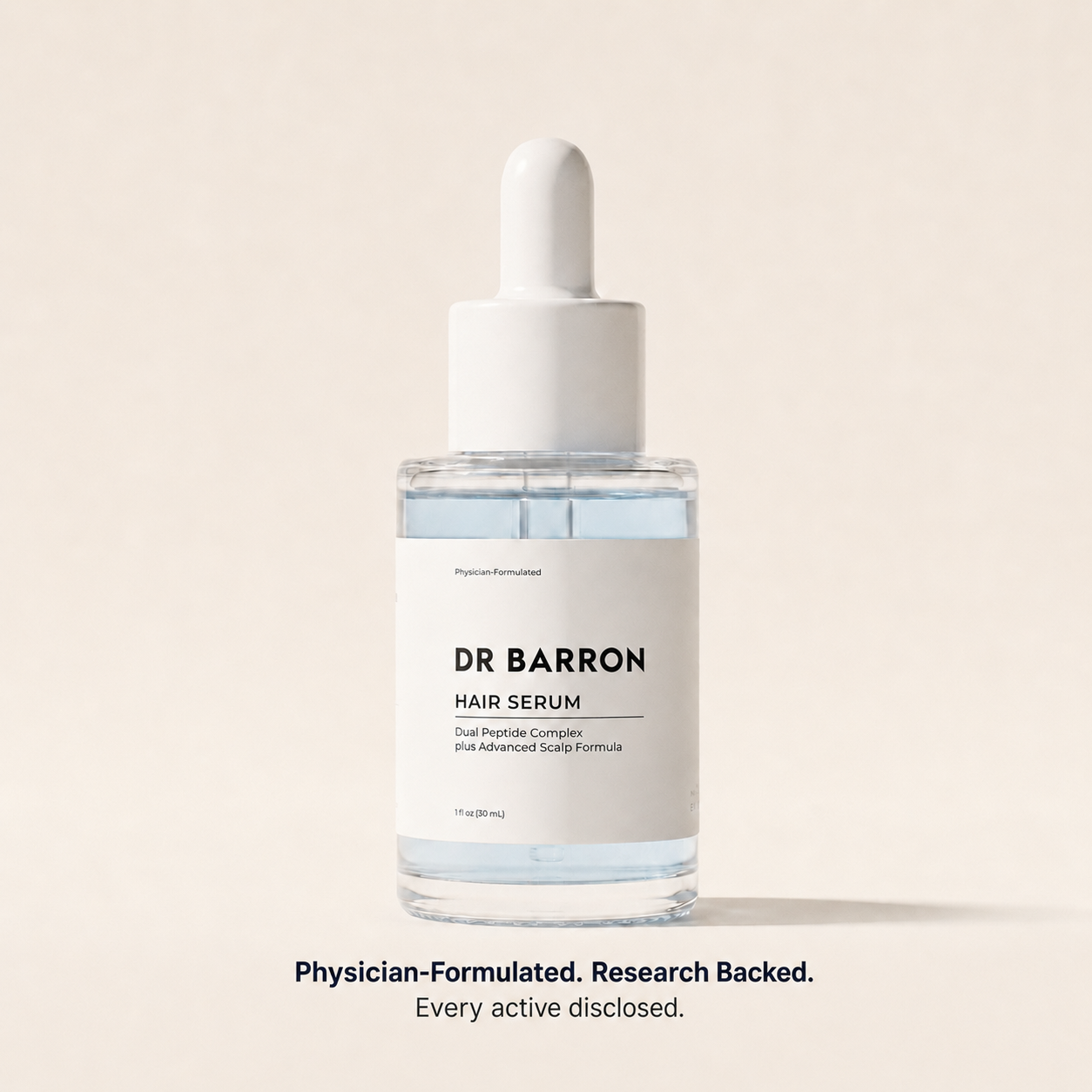
Hair Serum
Seven research-backed actives in one daily serum application. The formula generic hair brands skip . peptide signaling at the follicle, botanical density support, and the scalp microbiome layer most topicals skip entirely. Endocrinologist-formulated. Talk to your provider.
- DHT-pathway support
- Collagen + Vitamin C
- Topical Biotin
- 90-day money-back guarantee
- $25/mo, the lowest price we offer, against $29/mo on Monthly Subscription
- 3 bottles ship at once, a 90-day supply
- Lowest price per bottle, $25 instead of $35
- 90-day money-back guarantee
- Free shipping
- Cancel anytime
Because ninety days is one full hair cycle.
- Free: Make Your Part Look Fuller by Morning
- 90-Day Money-Back Guarantee
- Cancel or pause anytime
- Free shipping on every order
- Buy once, no subscription
- Free: Make Your Part Look Fuller by Morning
- 90-day money-back guarantee
Money Back
Shipping
Anytime
Benefits
-
Supports the appearance of fuller hair through peptide signaling that pulls follicles back into anagen after the postpartum estrogen drop
-
Supports the scalp surface environment new hair has to exit through, barrier, microbiome, microcirculation
-
Topical Biotin and the dual peptide complex, the actives that reach the scalp where pregnancy and nursing strip it first
Apply once daily to scalp.
One dropper application daily, to clean dry scalp. Like any supplement, the formula is intended for long-term daily use as part of a consistent routine, individual responses to supplementation vary.
What's Inside
7 Actives3 categories of topical actives selected for postpartum hair recovery.
-
Copper Tripeptide-1 (GHK-Cu)0.2%
A copper-bound peptide that signals the follicle to extend the anagen growth phase. When the postpartum estrogen drop pushes hair into telogen, GHK-Cu supports the signaling that pulls follicles back into growth.
-
Acetyl Tetrapeptide-30.01%
A signaling peptide studied for its role in dermal papilla size and follicle anchoring. Postpartum shedding is largely a release-from-telogen event, this supports the follicle-restart side.
-
Rosemary Leaf ExtractBOTANICAL
Studied head-to-head against a standard topical for density support. Useful during the recovery window when scalp follicles are restarting after a synchronized shed.
-
CaffeineSTIMULANT
Penetrates the follicle in minutes and supports the cell-energy side of follicle restart. The restart phase has high metabolic demand.
-
Bacillus FermentPOSTBIOTIC
A postbiotic that supports the scalp microbiome and barrier function. The postpartum window often comes with scalp dryness and itch, this supports the surface environment.
-
Saccharomyces Ferment FiltrateFERMENT
A yeast-derived ferment that supports keratinocyte turnover at the scalp surface. Helps the new hair exit zone stay clear during the recovery window.
-
Topical BiotinVITAMIN
Bypasses the oral absorption bottleneck and delivers biotin directly to the follicle, the site where keratin assembly actually happens.
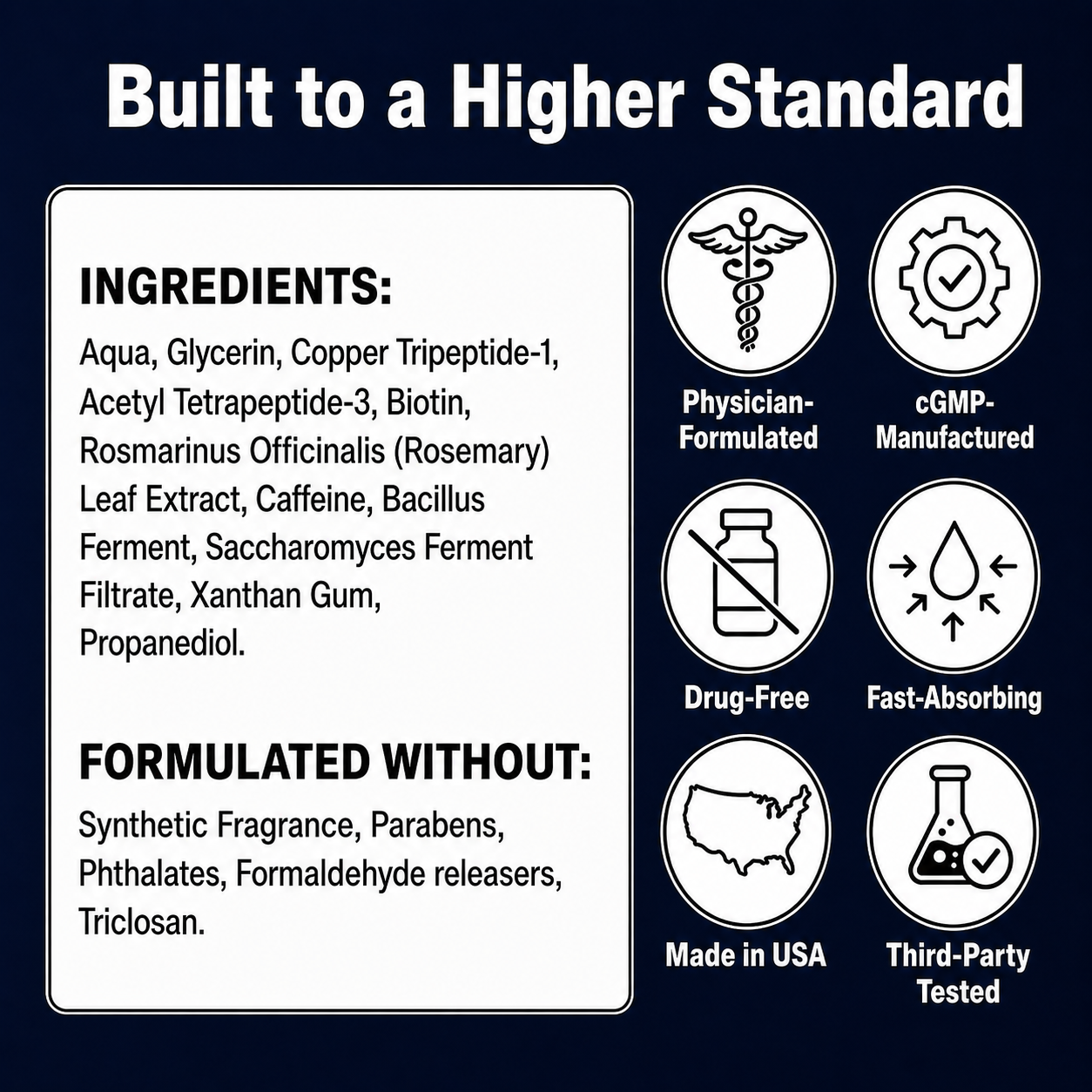
Built to a standard most supplements don’t hold themselves to
formulated
ingredients
bioavailability
facility
required
The New Gold Standard
See how DR BARRON compares on ingredient transparency and dose disclosure, every active, every dose, side by side.
 DR BARRON
The Complete System replaces the recovery routine you were building.
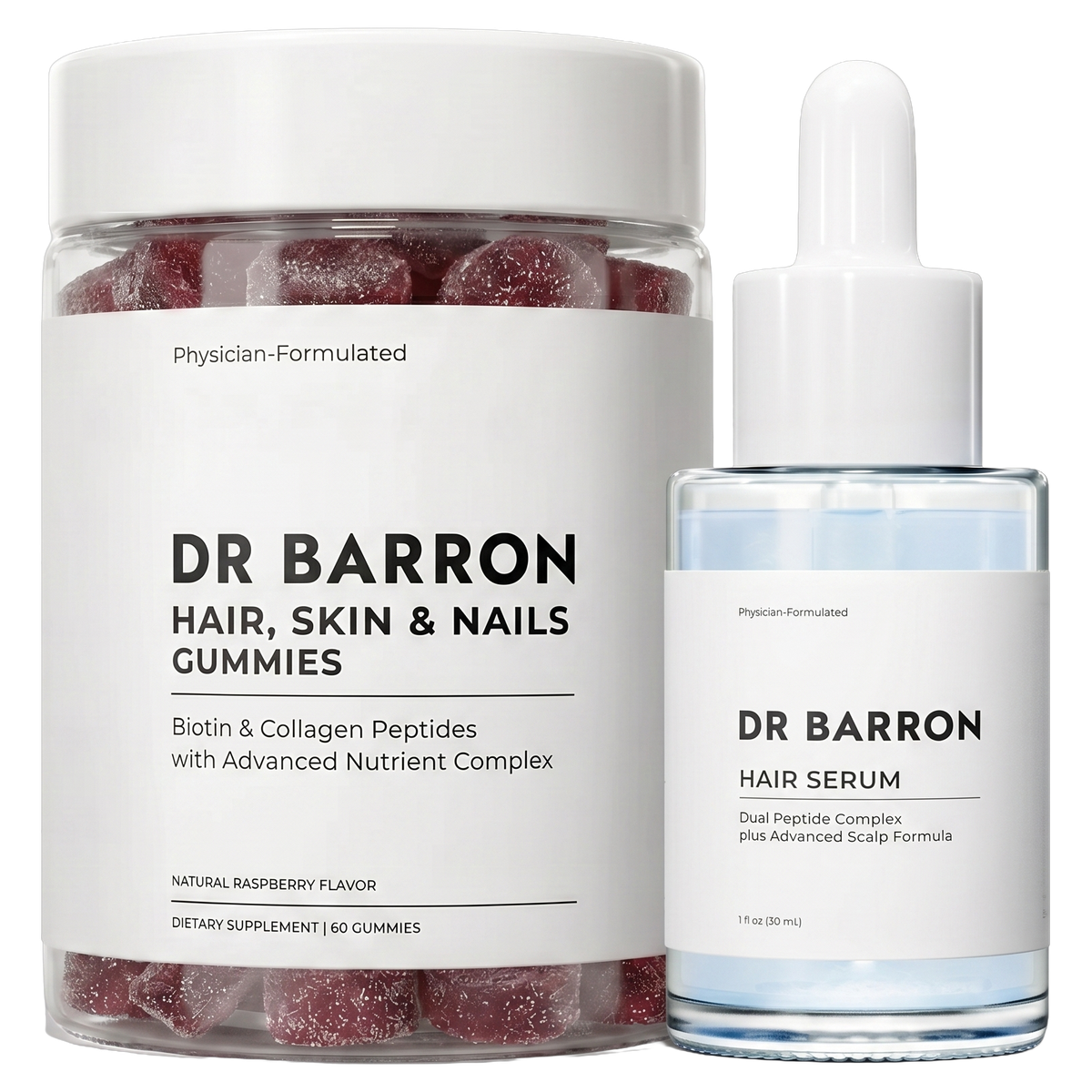
One serum for the recovery phase your scalp is in right now. One gummy for the nutrients your body is still rebuilding. Together, they replace 14+ separate scalp, hair, and supplement products for $57/mo.
The Complete System
Monthly breakdown
See the 14 products this replaces
- Bovine collagen peptides$35
- High-dose biotin$14
- Postnatal multivitamin$24
- Vitamin D3$12
- Iron + ferritin support$18
- Choline + B12$14
- Zinc$10
- Vitamin C$8
- MSM$14
- Omega-3 / DHA$22
- Vitamin E$10
- Peptide hair serum$48
- Caffeine scalp tonic$26
- Niacinamide scalp serum$32
- Antioxidant scalp treatment$28
- Carrier base$10
Prices based on average retail cost of comparable supplement and topical brands (Amazon, iHerb, brand direct · May 2026) at doses matching the actives in this formula. Items listed are commonly stacked in postpartum scalp-and-recovery routines rather than direct mechanistic equivalents. The Complete System price reflects the Monthly subscription rate.
Risk-Free
Feel it, or get your money back.
Questions, answered.

Have questions? We’re here for you.
Questions about your formula, your subscription, or anything in between? Our team responds within 1-2 business days.
Dr. Renanit E. Barron, M.D.
(since 2003)
boards
Palm Beach Illustrated
Board-certified endocrinologist practicing in Palm Beach County since 2003. M.D. from the University of Miami School of Medicine (1998), internal medicine residency at Orlando Regional Healthcare Systems (2001), and endocrinology fellowship at the University of Florida (2003).
Education
- Endocrinology Fellowship · University of Florida · 2003
- Internal Medicine Residency · Orlando Regional Healthcare Systems · 2001
- M.D. · University of Miami School of Medicine · 1998
Recognition & Awards
- Top Doctor in Endocrinology . Palm Beach Illustrated
- Top Doctor . Castle Connolly
- Top 10% nationally . Endocrine, Diabetes and Metabolism boards
- Resident of the Year . Orlando Regional Healthcare Systems